New York City

You did your best

2021-12-20

The new pattern for living seems to go like this. Emerge from a lockdown and shake off the careful life you built inside the restrictions imposed on you. Take a few halting steps out to your friend’s house, to the pub garden, walk the streets more and more carelessly. Soon you can forget the bread baking cycle and the little routines you imposed on yourself so you didn’t bang your head off your own four walls. Live more energetically and spontaneously (while you still can). Soon, travel is back on. Head out of the city and see your parents. Dare to book a plane ticket.

The New York Public Library archives

#books #nyc #history

2020-11-19

But the real gem of the library, in Lannon’s view, is the stuff that you can find only in boxes like the ones now strewn across the table. “You can get a book anywhere,” he said. “An archive exists in one location.” The room we’re standing in is the only place that you can read, say, the week’s worth of journal entries in which New York Times editor Abe Rosenthal contemplates publishing the Pentagon Papers. It’s the only place where you can read the collected papers of Robert Moses, or a letter T.S. Eliot wrote about Ulysses to James Joyce’s Paris publisher, Sylvia Beach.

These collections aren’t digitized. The only way to find out what’s inside them is to ask for a particular box — often with just a vague notion of what will be in it — and to hold the old papers in your hands. “I don’t know how one could be interested in libraries and not archives,” Lannon told me. They tell you “the stories behind things,” he said, “the unpublished, the hard to find, the true story.” This, I began to see, is why someone might have been inclined to call Lannon the most interesting man in the world: it’s because he knows so many of these stories himself, including stories that no one else knows, because they are only told here.

That is the paradox of being an archivist. The reason an archivist should know something, Lannon said, is to help others to know it. But it’s not really the archivist’s place to impose his knowledge on anyone else. Indeed, if the field could be said to have a creed, it’s that archivists aren’t there to tell you what’s important. Historically momentous documents are to be left in folders next to the trivial and the mundane — because who’s to say what’s actually mundane or not?

Keepers of the Secrets, James Somers in The Village Voice
The New York Accent

#language #linguistics #nyc

2020-09-24

To begin with, White reminds us, the original Americans always pronounced r, as the British did in colonial times. Only in the late 18th century did the British stop pronouncing r after a vowel. Not surprisingly, the colonists who remained in the big East Coast seaports and had regular contact with London adopted the new British pronunciation. But those who settled inland retained the old r and never lost it. (As White says, this means that Shakespeare’s accent was probably more like standard American today than Received Pronunciation.)

Tawk of the Town, Patricia T O’ Conner in Literary Review

It's very hard to tear down a bridge

#cities #justice #race #nyc

2020-08-21

I remember his aide, Sid Shapiro, who I spent a lot of time getting to talk to me, he finally talked to me. And he had this quote that I’ve never forgotten. He said Moses didn’t want poor people, particularly poor people of color, to use Jones Beach, so they had legislation passed forbidding the use of buses on parkways.

Then he had this quote, and I can still hear him saying it to me. “Legislation can always be changed. It’s very hard to tear down a bridge once it’s up.” So he built 180 or 170 bridges too low for buses.

We used Jones Beach a lot, because I used to work the night shift for the first couple of years, so I’d sleep til 12 and then we’d go down and spend a lot of afternoons at the beach. It never occurred to me that there weren’t any black people at the beach.

So Ina and I went to the main parking lot, that huge 10,000-car lot. We stood there with steno pads, and we had three columns: Whites, Blacks, Others. And I still remember that first column — there were a few Others, and almost no Blacks. The Whites would go on to the next page. I said, God, this is what Robert Moses did. This is how you can shape a metropolis for generations.

Robert Caro Wonders What New York Is Going To Become , Christopher Robbins in Gothamist via Kottke

The bedsheets may be in use elsewhere?

2020-04-26

I’m reading the epic biography of Robert Moses, The Power Broker, at the moment. At the moment it’s the 1920s and Moses is trying to wrestle swathes of land off the robber barons who’ve built their manor houses on Long Island, so that he can build extensive park systems and a parkway to connect them to the city.

It’s a mammoth book but I’m really enjoying it. The 1920s is an interesting era in American history not just because of my teenage obsession with The Great Gatsby and the associated milieu, but because it’s also a period when the Klan were incredibly active in white, Protestant communities all over the country, and because it’s when the robber barons of the Gilded Age were really trying to hand onto their wealth.

ny extras

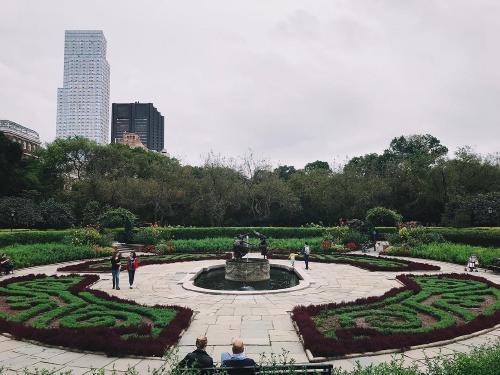
Central Park North–110th Street

2018-09-26

ny extras

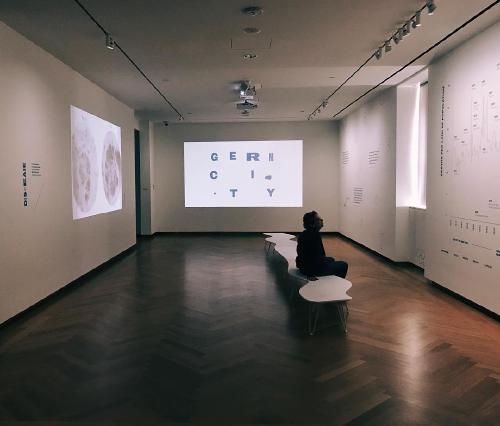
Museum of the City of New York

2018-09-26

ny extras

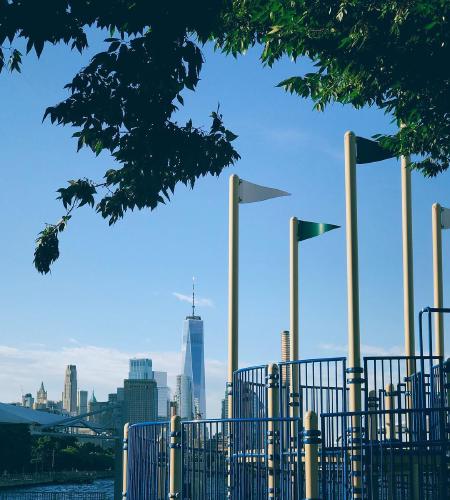
Pier 51 Playground, Hudson River, NYC

2018-09-26